MOZ Coupons: The Fake Attraction of “Too Good to Be True” Deals
Let me start with a simple question: have you ever searched for “Moz coupons” hoping to slash the price of one of the most respected SEO tools out there… only to land on a dozen sketchy-looking websites promising 70% off?
Yeah, same here.
At first glance, it feels like you’ve stumbled onto a secret backdoor deal. But spend a few minutes digging—and things start to feel off. Expired codes. Redirect loops. “Exclusive discounts” that don’t actually work. And suddenly, what looked like a smart money-saving move begins to feel like a trap.
This article isn’t just about Moz coupons. It’s about the illusion behind them—the psychology, the marketing tricks, and the real cost of chasing discounts that often don’t exist.

Activate Moz Now | free trial 7 days → Click Here
Let’s unpack this properly.
What Are “Moz Coupons” (and Why Do They Exist Everywhere)?
If you search for Moz coupons, you’ll find hundreds of pages claiming to offer:
- Promo codes
- Limited-time discounts
- Insider deals
- “Secret” pricing hacks
But here’s the reality: Moz rarely offers traditional coupon codes.
Instead, their pricing model is straightforward—monthly subscriptions with occasional official promotions, usually tied to events, partnerships, or free trials.
So why does the internet feel flooded with Moz coupon pages?
The real reason: SEO arbitrage
Many websites create “coupon pages” not to help you—but to capture your search traffic. They rank for keywords like:
- “Moz discount code”
- “Moz coupon 2026”
- “Moz promo offer”
Then they monetize your visit through:
- Affiliate links
- Ads
- Lead capture
- Redirect funnels
In other words, you’re the product—not the coupon.
The Psychology Behind the Attraction
Let’s be honest—we’re wired to love discounts.
Even when you know something might be questionable, your brain says:
“What if this one actually works?”
This is not accidental. Coupon pages are designed to trigger:
1. Scarcity Bias
“Only 3 coupons left!”
“Expires in 2 hours!”
Even if it’s fake, it pushes urgency.
2. Loss Aversion
You don’t want to miss a deal—even if it’s imaginary.
3. Authority Illusion
Some sites mimic trusted brands, making you feel safe clicking.
I’ve personally clicked through at least 10 of these pages in one sitting—only to realize none of them actually applied any discount.
It’s not stupidity. It’s psychology.
How Moz Actually Works (No Illusions)
If you strip away the noise, Moz is pretty transparent.
Their core offering includes:
- Keyword research tools
- Domain authority tracking
- Site audits
- Link analysis
- Rank tracking
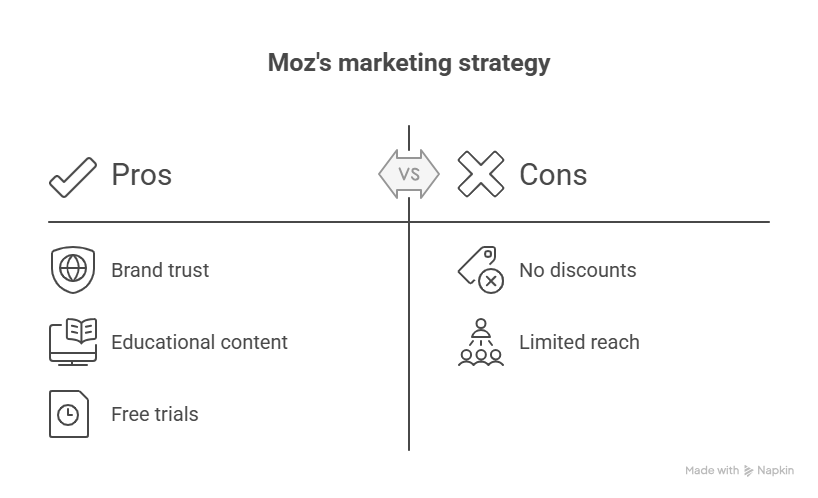
Instead of coupon-heavy marketing, Moz relies on:
- Free trials
- Educational content
- Brand trust
That’s a big difference.
Many SaaS companies flood the market with discounts. Moz doesn’t. And that alone tells you something about their positioning.
The Real Value vs. The Coupon Illusion
Here’s a perspective that took me years to internalize:
A 0% discount on a tool that actually grows your business is often more valuable than a 70% discount on something that doesn’t.
Let’s break it down.
When Moz is worth it
- You’re serious about SEO
- You need reliable data
- You want long-term strategy, not hacks
- You run a business, blog, or agency
When chasing coupons backfires
- You delay decisions waiting for a “better deal”
- You end up using inferior tools just because they’re cheaper
- You waste time hopping between fake coupon pages
Time is a cost. Confusion is a cost. Missed opportunities? Even bigger cost.
Who Falls for Moz Coupon Traps the Most?
Not beginners. Surprisingly, it’s often intermediate users.
Why?
Because they know enough to recognize Moz’s value—but still want to optimize cost aggressively.
Typical profiles:
1. Affiliate marketers
Looking to maximize ROI, minimize tool expenses.
2. Freelancers
Operating on tight margins.
3. Small business owners
Trying to justify every dollar spent.
Ironically, these are the exact people who benefit most from clarity—not coupon hunting.
When and Where Discounts Actually Exist
Let’s be fair—discounts do exist. Just not in the way most coupon sites suggest.
Legitimate opportunities include:
- Seasonal promotions (rare)
- Partner deals (e.g., integrations or bundles)
- Free trial offers
- Educational or community-based discounts
But here’s the catch:
👉 They are always announced officially—not hidden behind random coupon aggregators.
If you’re relying on third-party coupon sites, you’re already off track.
The Dark Side of Coupon Hunting
This is where things get uncomfortable.

Because chasing Moz coupons isn’t just harmless—it has real downsides.
1. Time Drain
You think you’re saving money. But you’re actually spending:
- 20–30 minutes per session
- Jumping between fake pages
- Testing invalid codes
Multiply that over weeks. It adds up.
2. Data Risk
Some coupon sites:
- Collect emails
- Track behavior
- Push shady downloads
You’re trading your data for nothing.
3. Decision Paralysis
You keep waiting.
“Maybe tomorrow there’ll be a better code.”
And meanwhile? You’re not using the tool. Not improving your SEO. Not growing.
What Critics Say (And They’re Not Wrong)
Let’s steelman the opposing view.
Some people argue:
“Why pay full price when discounts might exist?”
Fair point.
And yes—smart consumers should look for deals.
But here’s where the criticism of coupon culture becomes valid:
It creates a false economy
You’re optimizing for price—not value.
It rewards low-quality ecosystems
Coupon spam sites exist because people click them.
It distracts from actual growth
You’re focusing on saving $20 instead of making $200.
And that’s the real trade-off.
What Moz Coupons Do NOT Solve
Let’s be brutally honest.
Even if you found a working coupon, it wouldn’t solve:
- Lack of SEO strategy
- Poor content quality
- Weak backlinks
- Low domain authority
A tool is just a tool.
And a discount doesn’t magically make it more effective.
Alternatives: Smarter Ways to Save (Without the Illusion)
If your goal is to save money and get value, here’s what actually works:
%20-%20visual%20selection.png)
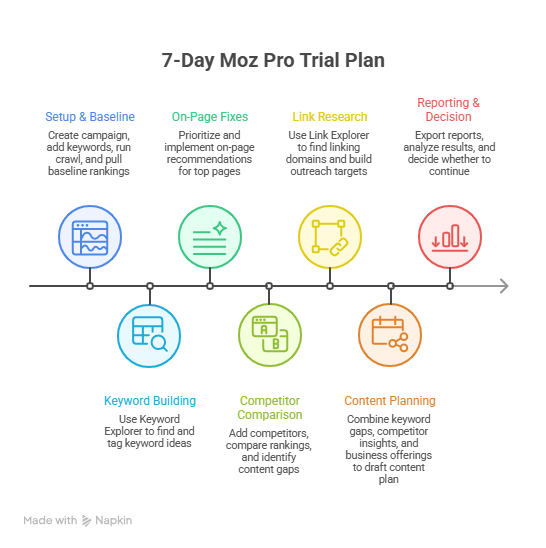
1. Use the Free Trial Properly
Don’t just “explore.”
Set a plan:
- Audit your site
- Extract keyword lists
- Analyze competitors
Maximize the trial like a pro.
2. Time Your Subscription
Subscribe when you actually need it—not “just in case.”
3. Consider Tool Rotation
Use Moz for a specific period, then switch if needed.
4. Invest in Learning
A well-used tool beats a discounted unused tool every time.
My Personal Take (After Years in SEO)
I’ve been in the SEO space long enough to see patterns repeat.
Moz coupons fall into a category I call:
“Digital mirages.”
They look real from a distance. But the closer you get, the more they disappear.
Early in my journey, I chased every deal I could find. I thought I was being smart. Efficient. Strategic.
In reality?
I was wasting time and delaying progress.
The moment I stopped chasing coupons and started focusing on execution, everything changed:
- Better rankings
- Better content
- Better ROI
Not because I paid more—but because I acted faster.
The Hard Truth Most People Won’t Say
Here it is:
If you need a coupon to justify using a tool like Moz, you probably don’t need the tool yet.
That’s not criticism—it’s clarity.
Moz is an investment tool. Not a casual purchase.
And if your business (or blog) can’t justify its cost, the problem isn’t the price.
It’s the stage you’re at.
So… Are Moz Coupons Fake?
Not entirely.
But the attraction around them is largely fake.
- Most codes don’t work
- Most pages exist for traffic, not value
- Most “deals” are recycled or misleading
The idea of easy savings is real.
The execution? Mostly illusion.
Final Thoughts: Stop Chasing Discounts, Start Building Results
Let’s bring this back to you.
You’re here because you want to make smarter decisions—whether it’s for your blog, business, or SEO strategy.
So here’s the shift:
Instead of asking:
“Where can I find a Moz coupon?”
Ask:
“How can I get maximum value from Moz—starting today?”
Because that’s where the real leverage is.
Your Next Step
- Skip the coupon rabbit hole
- Go directly to Moz’s official offer or free trial
- Use it with intention—have a plan before you start
- Focus on execution, not discounts
That’s how professionals operate.
And once you start thinking that way, you’ll realize something powerful:
You don’t need coupons to grow.
You need clarity, action, and the right tools—used the right way.
Activate Moz Now | free trial 7 days → Click Here